

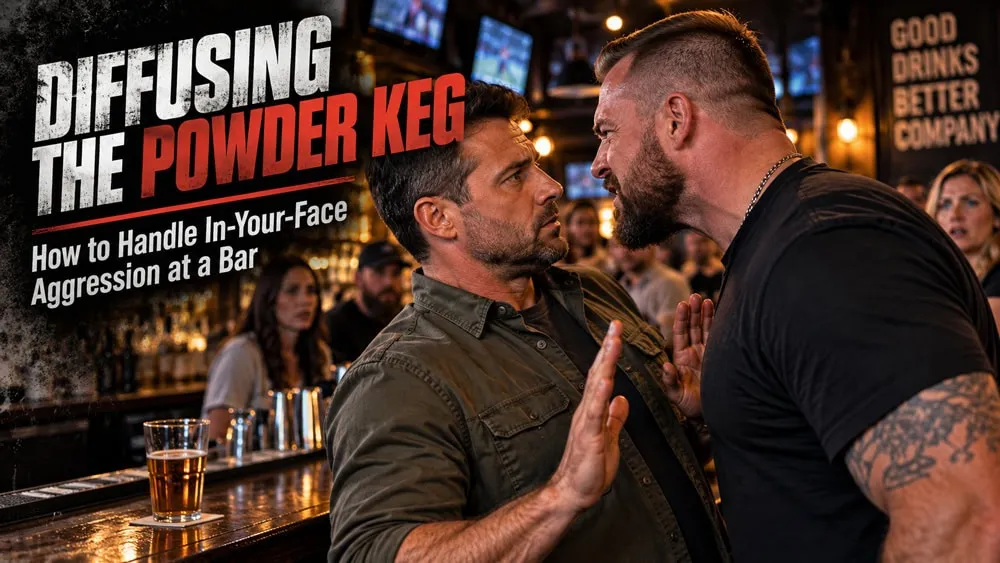
A crowded bar can go from uncomfortable to dangerous in seconds. The goal is not to “win” the confrontation—it is to protect yourself, create space, and get out safely.
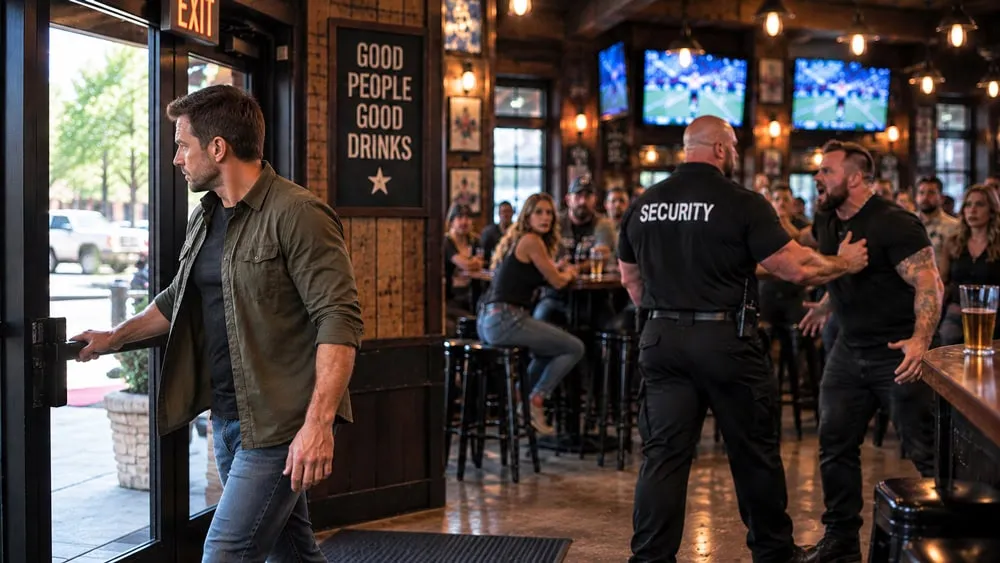
Imagine sitting at a crowded bar when an aggressive stranger gets right into your personal space. He is screaming threats, invading your boundary, and chest-bumping you.
In a chaotic, ego-driven environment like a bar, physical confrontations can erupt in seconds. Many people assume self-defense means throwing the first punch to end the threat immediately, but escalating to violence carries huge physical and legal risks. Here is an in-depth, tactical breakdown of how to handle close-proximity aggression safely and effectively.
Establish the “Fence” (Passive Defensive Stance)
When someone gets right in your face, keeping your hands down at your sides leaves your head completely exposed to a sudden punch or headbutt. However, making clenched fists can trigger an immediate physical fight.
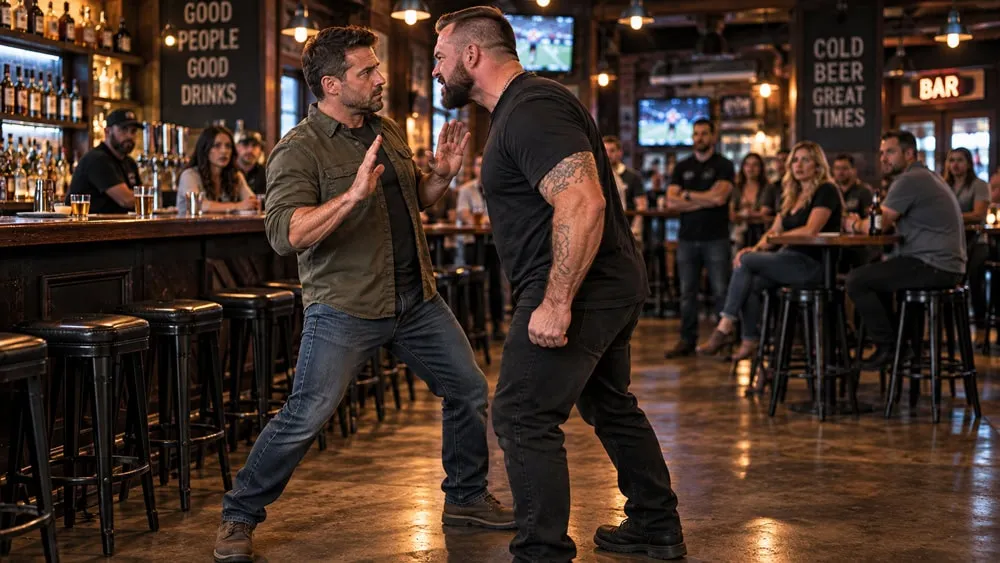
- Raise Your Hands to Chest Height: Position your hands open, palms facing outward, around chest or chin level. This creates a physical barrier (often called “the fence”) between your face and the aggressor.
- Protect Your Space: Having your hands up allows you to block an incoming strike, deflect a push, or create distance without appearing as the aggressor to bystanders or security cameras.
- Maintain a Staggered Base: Step one foot slightly back to widen your stance. This prevents you from losing your balance if the aggressor chest-bumps or shoves you.
Avoid the “Turn and Walk Away” Trap
Your instinct might be to turn your back and walk away to dismiss the conflict, but doing so prematurely in close quarters can leave you extremely vulnerable.
Why turning your back is dangerous: Turning completely away from an aggressive person who is already touching or chest-bumping you exposes the back of your head and neck to a blind strike or tackle.
What to Do Instead
- Create Space Before Turning: Use your hands against their chest or shoulder to firmly push off and create several feet of separation.
- Back Away Facing Them: Step backward while keeping your eyes on their hands and body movements until you are out of striking range and surrounded by security or neutral patrons.
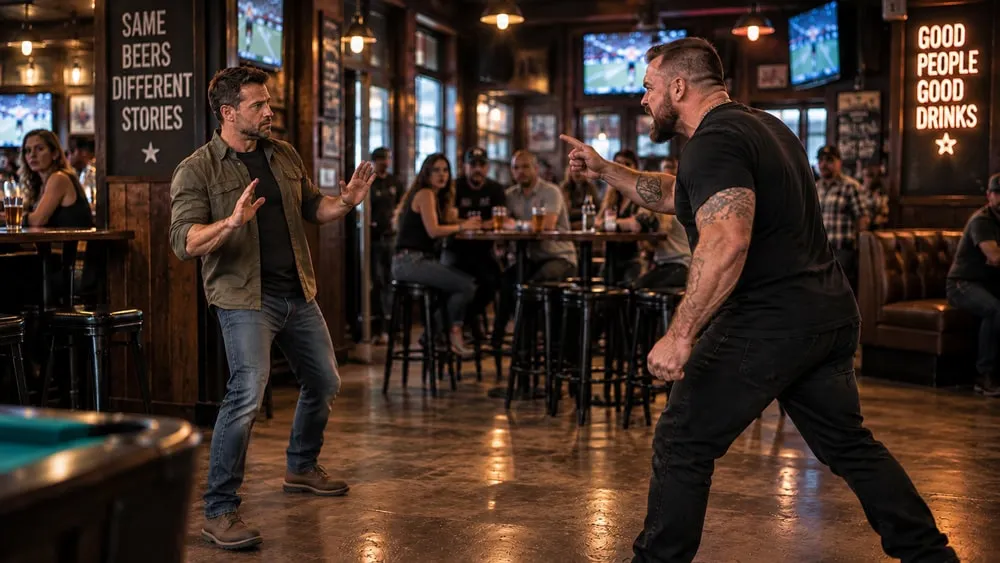
De-escalation vs. Preemptive Striking
When managing an aggressive individual, every choice has distinct legal and physical consequences.
| Action | Tactical Reality | Legal / Safety Risk |
|---|---|---|
| Throwing a Preemptive Strike | May momentarily surprise the attacker or end the threat. | High Risk. CCTV footage or witnesses may view you as the primary aggressor, leading to criminal charges or ejection by security. |
| Open-Hand De-escalation | Keeps hands ready to defend while attempting to lower adrenaline. | Low Risk. Shows clear intent to avoid violence while maintaining a strong defensive structure. |
| Shouting Back / Escalating | Matches their energy and fuels ego-driven violence. | High Risk. Guarantees the situation escalates into a full-scale physical fight. |
Stay controlled. The objective is not to match the other person’s energy. Keep your hands ready, your voice controlled, and your attention on creating enough space to disengage.
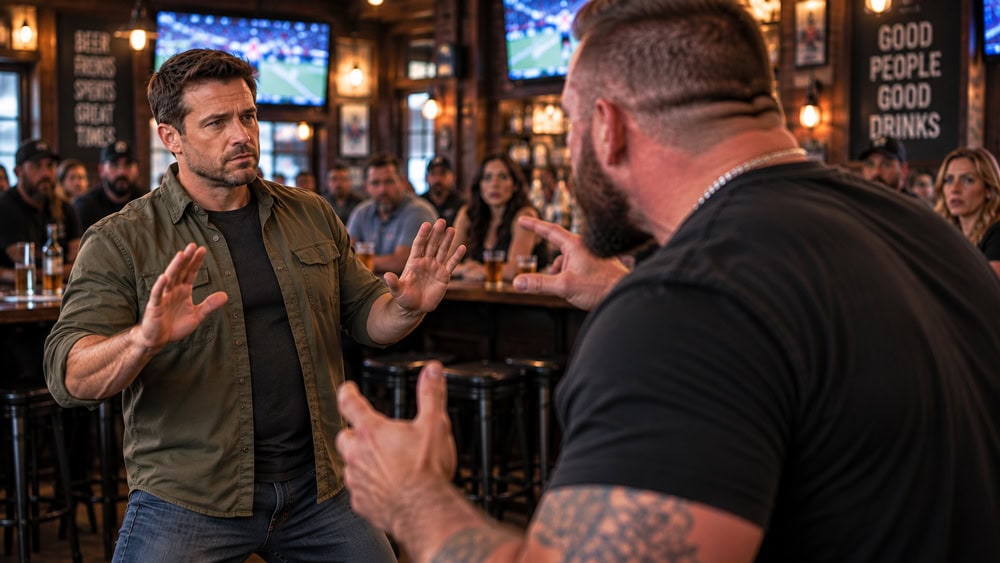
Engage Bar Security and Exit
Once you have established your defensive frame and created physical separation, hand off the situation to venue staff.
- Signal Bouncers or Staff: Bouncers and bartenders are responsible for managing rowdy patrons. Alert them loudly: “I need some help over here, this guy is being aggressive.”
- Exit the Venue: If the individual remains belligerent or security fails to intervene, leave the establishment immediately to prevent a secondary encounter outside.
Summary Checklist for Bar Security
- Raise your hands in an open “fence” to protect your head and create a physical boundary.
- Widen your stance so you don’t lose balance from chest-bumps or pushes.
- Never turn your back completely on an aggressive person while within striking range.
- De-escalate verbally with calm, firm language while backing away.
- Notify bouncers or security staff immediately to handle the disruptive individual.
The Goal Is a Safe Exit
Keep your hands open, create distance, stay aware of the aggressor’s movements, involve venue security, and leave before the confrontation has another chance to ignite.
