

Public transit is an everyday necessity for millions, but its crowded, confined spaces require an extra level of vigilance. Imagine stepping onto a commuter train and immediately spotting a passenger standing near the doors. He is scanning the crowd, his hands are rigidly buried inside a heavy jacket pocket, and he is sweating profusely despite the cold air in the car. Strangely, no one else around you seems to notice.
When you spot a combination of erratic behavioral anomalies in a confined space, you cannot afford to blend into the crowd and ignore it. Recognizing high-risk indicators and executing a quick, calm relocation strategy can keep you safe.
Step 1: Recognize the Behavioral Anomalies
In personal security, it is crucial to look for "behaviors out of context." A single anomaly might not mean much, but a cluster of them is a strong signal to pay attention.
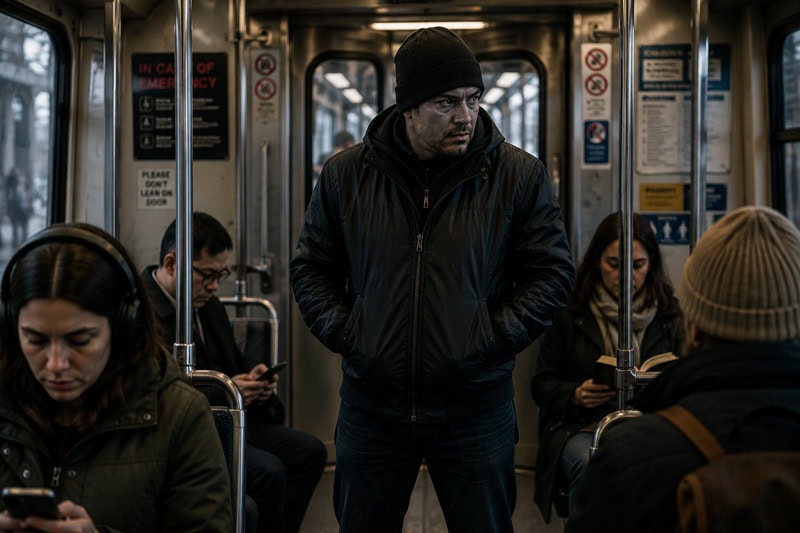
- Hands Concealed: Hidden hands are a primary threat indicator. When someone keeps their hands completely buried inside a pocket in a tense posture, it suggests they may be concealing a weapon or illicit items.
- Physiological Stress: Sweating heavily in a cold environment is a sign of intense autonomic nervous system arousal—often triggered by fear, anxiety, acute intoxication, or anticipation of an event.
- Scanning the Room: An intense, scanning gaze that looks over the crowd rather than focusing on a phone, book, or standard transit behavior indicates that the individual is actively assessing the layout or selecting a target.
Step 2: Avoid the "Staring Match" Trap
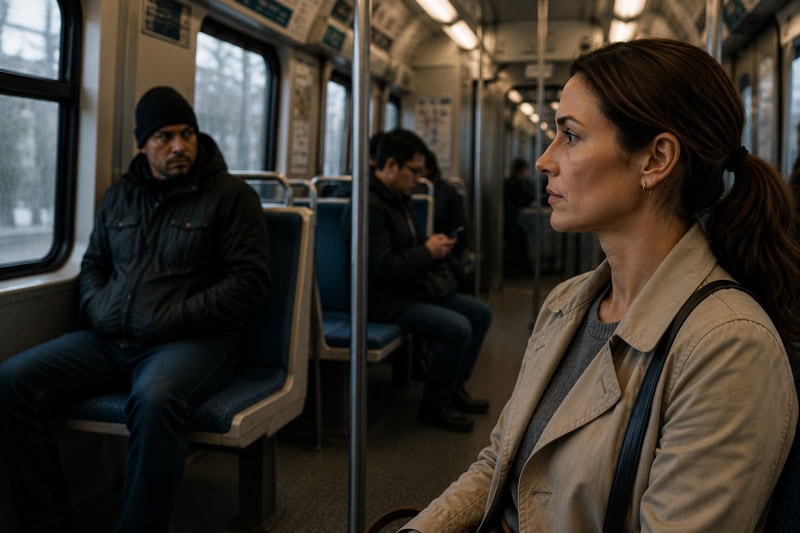
Your instinct might be to lock your eyes onto the individual to monitor their every move. While maintaining awareness is essential, staring directly at a highly agitated person can trigger a dangerous reaction.
What to Do Instead:
- Use Peripheral Vision: Keep your head turned naturally but keep tabs on their movements using your peripheral field of view.
- Do Not Bluff: Do not glare, make aggressive gestures, or challenge the individual. Maintain a calm, neutral facial expression.
Step 3: Execute a Tactical Relocation
If your intuition signals that the environment is unsafe, do not stay in your seat out of politeness or a fear of looking foolish. Take action to create physical distance immediately.
Option A: Move to the Next Car (Best Option)
Most modern commuter trains allow passengers to pass between cars while in motion.
- Walk with Purpose: Stand up naturally and walk toward the opposite end of the car. Do not run or cause a panic among other passengers.
- Create a Barrier: Slip through the heavy connecting doors into the next car. This puts a literal physical boundary and extra distance between you and the individual.
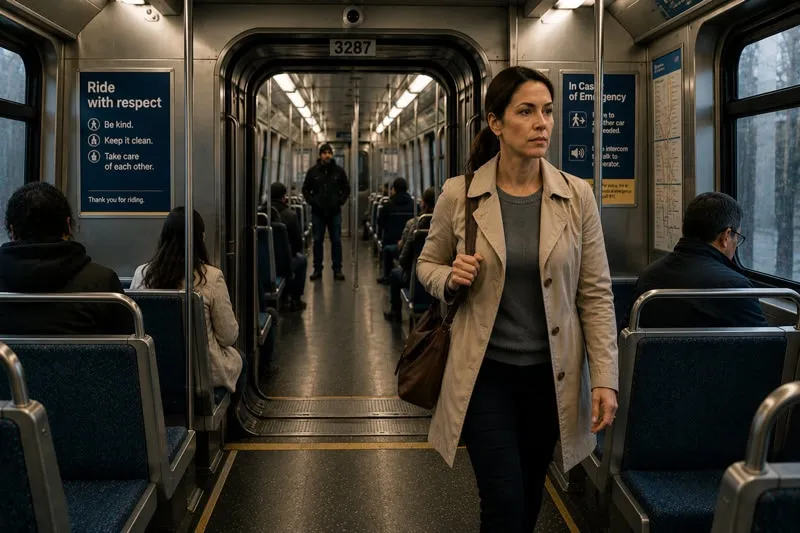
Option B: Change Your Position in the Car
If the train doors are locked or passing between cars is prohibited:
- Put People Between You: Move down the aisle to a spot where multiple passengers stand or sit between you and the threat.
- Locate the Emergency Intercom: Position yourself near the train's internal emergency call button or intercom panel, which is typically located near the exit doors or the ends of the car.
Step 4: Report and Deboard
Once you have safely distanced yourself, focus on alert protocols and getting off the train.
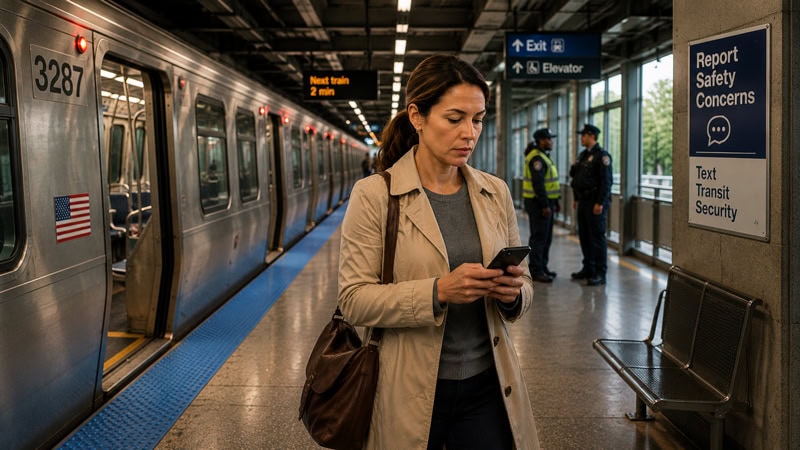
| Action | Tactical Value |
|---|---|
| Locate Train Car Numbers | Look for the stamped car ID number on the wall near the ceiling or doors. Dispatchers need this exact number to send security to the right location. |
| Use Transit Safety Apps / SMS | Many modern transit authorities have text-tipped lines or dedicated security apps. This allows you to report a threat silently without drawing attention by making a voice call. |
| Exit at the Next Stop | Do not wait for your scheduled stop if you feel an imminent danger. Get off at the next platform, step into a well-lit public area, and notify platform security or station staff immediately. |
Summary Checklist for Public Transit Safety
- Scan the car when entering to note emergency exits, intercom locations, and unusual behaviors.
- Watch for clusters of anomalies like hidden hands, heavy sweating in the cold, and hyper-vigilance.
- Avoid locking eyes with an agitated person to prevent drawing their aggression.
- Move to the next train car calmly to place a structural barrier between yourself and the threat.
- Report the situation silently using transit text lines, apps, or by noting the car number for authorities.
