

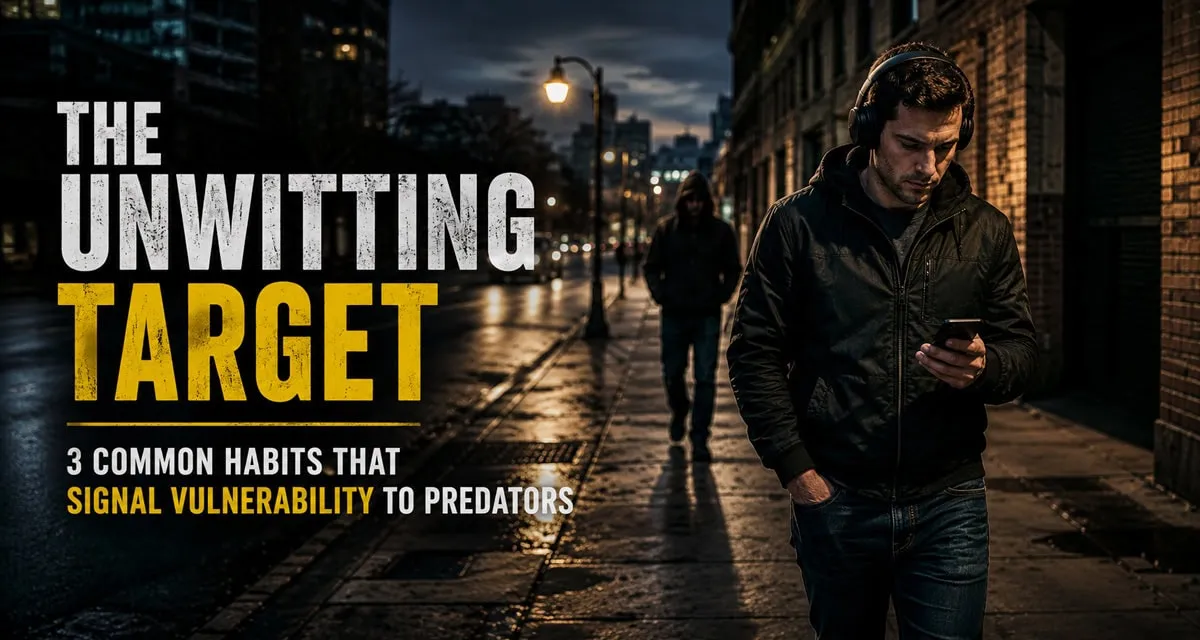
Everyday habits can quietly advertise distraction, reduced awareness, and delayed reaction time. The danger is not any one behavior alone—it is what happens when several vulnerabilities appear at once.
Imagine walking down a quiet city street at dusk. You have noise-canceling headphones snugly in place, your head is tilted down as you read a text message, and your other hand is jammed deep into your pocket. Suddenly, a shadow detaches itself from an alleyway right next to you.
In that single, high-stakes moment, a potential attacker did not simply pick you at random. They recognized a cluster of vulnerabilities that marked you as a soft target. While any of these three habits can compromise your safety, combining them creates a perfect storm for an ambush.
Noise-Canceling Headphones: The Auditory Blindfold
In modern city life, putting in noise-canceling earbuds or over-ear headphones feels like a routine way to unwind. In public spaces, however, doing so surrenders one of your most critical defensive senses.
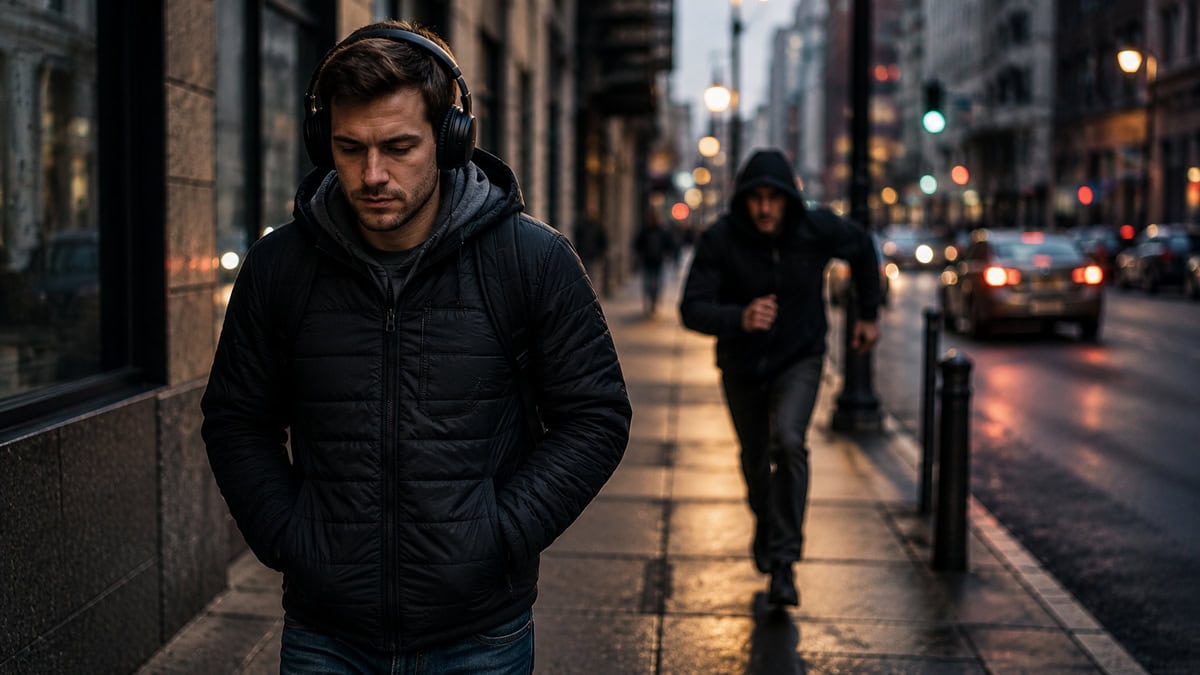
- Why Predators Look for It: Attackers rely heavily on approaching from behind or from blind spots. Your ears naturally pick up subtle auditory cues—footsteps on gravel, a car door opening nearby, or rapid breathing—before a potential threat enters your visual field.
- The Tactical Risk: Noise cancellation isolates you from your immediate environment, eliminating an important early-warning system and making surprise much easier.
- The Correction: If you must listen to audio while walking outside, keep one ear completely uncovered or switch your device to transparency mode. Keep the volume low enough that ambient street sounds remain clearly audible.
Looking Down at Your Phone: Visual Tunnel Vision
Focusing on a screen—whether replying to a text message, checking social media, or scrolling through music—severely restricts your field of view.
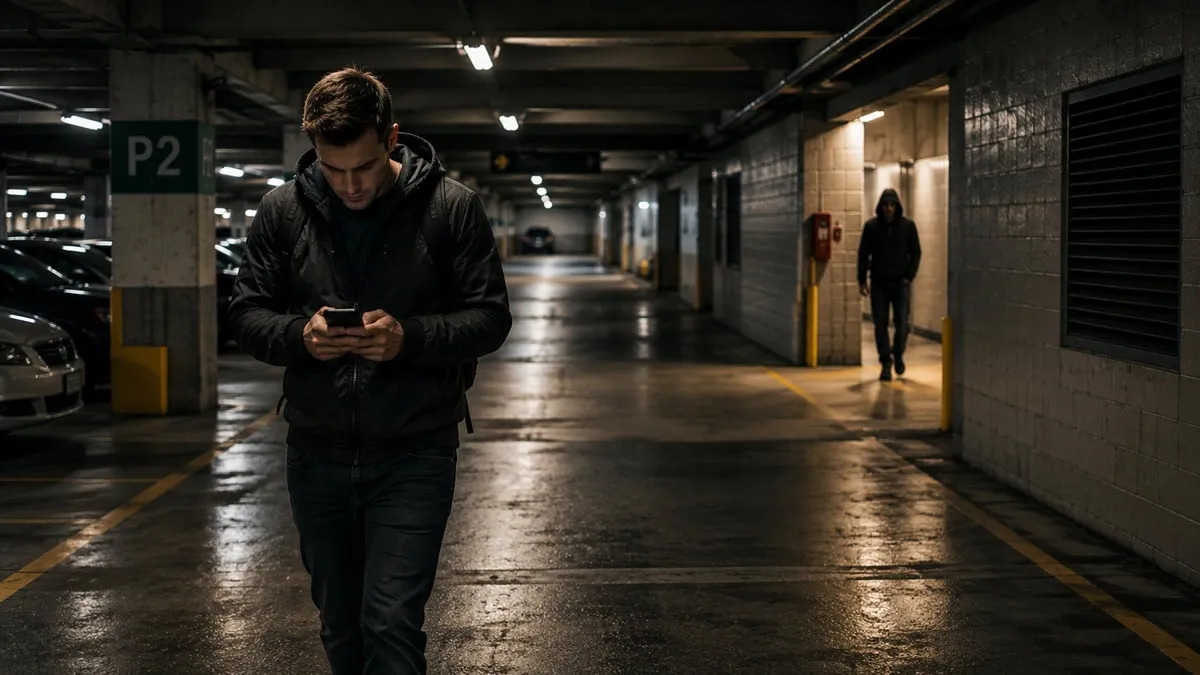
- Why Predators Look for It: Staring down at a screen signals total mental absorption. It tells anyone watching that your attention is elsewhere and that you may not recognize a threat until it is already very close.
- The Tactical Risk: Looking down tilts your posture forward and narrows what you can see ahead, making it harder to scan side alleys, notice movement at the edges of your vision, or recognize someone closing distance from behind.
- The Correction: If you need to check your phone, treat it as a temporary stop. Step against a solid wall or building facade with a clear view of your surroundings, scan the area first, check the message quickly, and put the phone away before you start walking again.
Hands Jammed in Pockets: Eliminating Physical Defense
Walking with your hands buried deep inside your coat or pant pockets might feel comfortable or warm, but it significantly hinders physical mobility and reaction time.
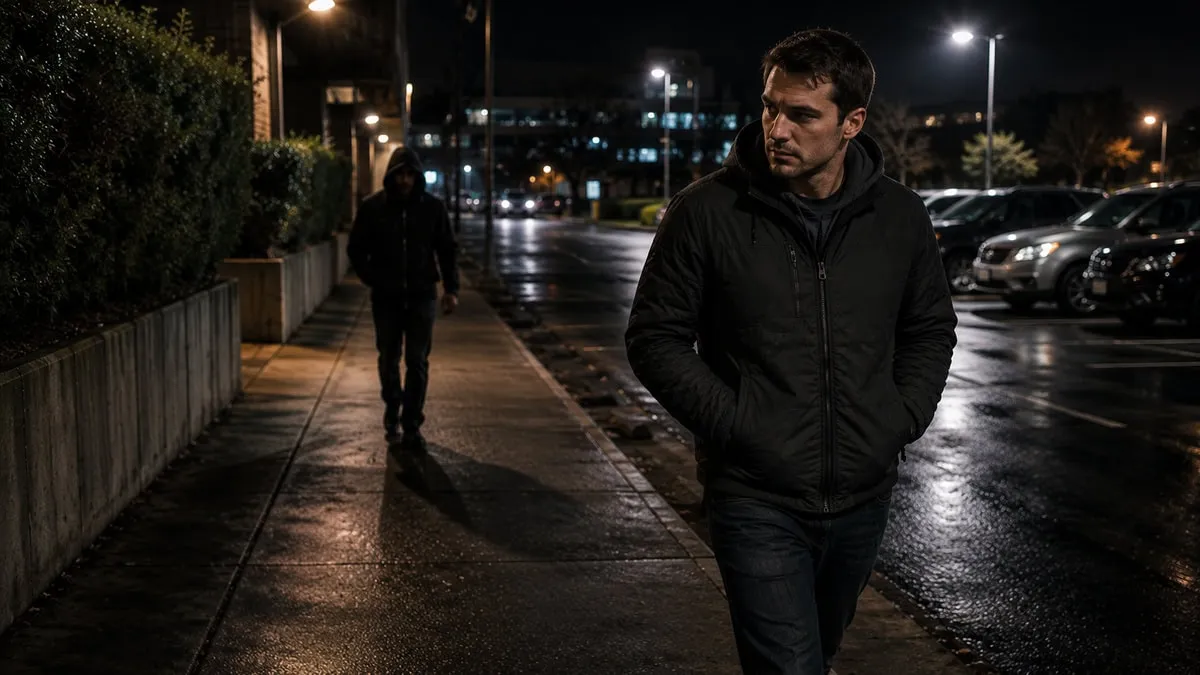
- Why Predators Look for It: A person with buried hands cannot react as quickly to sudden physical contact, making it easier to overwhelm them or push them off balance before they can respond.
- The Tactical Risk: If an ambush occurs, it takes precious fractions of a second to disengage your hands from your pockets. That delay can interfere with your ability to cover your face, post your hands to block incoming contact, or reach a defensive tool.
- The Correction: Keep your hands free, unpocketed, and relaxed at your sides while walking in public. In cold weather, wear gloves so you do not feel compelled to keep your hands buried in your pockets.
The Anatomy of the Triple Mistake
Each habit removes a different layer of awareness or response. Combined, they can leave a person unable to hear an approach, see a threat developing, or react quickly to sudden contact.
| Habit | Primary Function Lost | How a Predator Views It |
|---|---|---|
| Noise-Canceling Headphones | Early Auditory Warning | “They won’t hear me approach from behind.” |
| Focusing on a Phone | Visual Horizon Scanning | “They won’t see me step out from the alley.” |
| Hands in Pockets | Immediate Physical Reaction | “They can’t block, strike, or defend themselves.” |
Summary Checklist for Street Awareness
- Keep at least one ear free of headphones or active noise cancellation in public.
- Keep your head elevated and your eyes scanning the area ahead.
- Stop in a secure spot against a wall if you must read or reply to a text.
- Keep your hands out of your pockets so you preserve your ability to react.
- Scan dark alleys, corners, and alcoves before you walk past them.

Awareness Is a Habit, Too.
None of these behaviors are unusual. That is exactly why they are easy to overlook. Headphones, phones, and pockets are part of everyday life—but in the wrong place at the wrong time, they can quietly reduce your awareness and slow your response.
The goal is not to move through the world expecting danger around every corner. It is to avoid unnecessarily surrendering your senses and mobility when a few simple adjustments can keep you more aware of what is happening around you.
Keep your ears available. Keep your eyes up. Keep your hands free.
