

Frozen on the Highway: What to Do If You Are Stranded in a Winter Storm
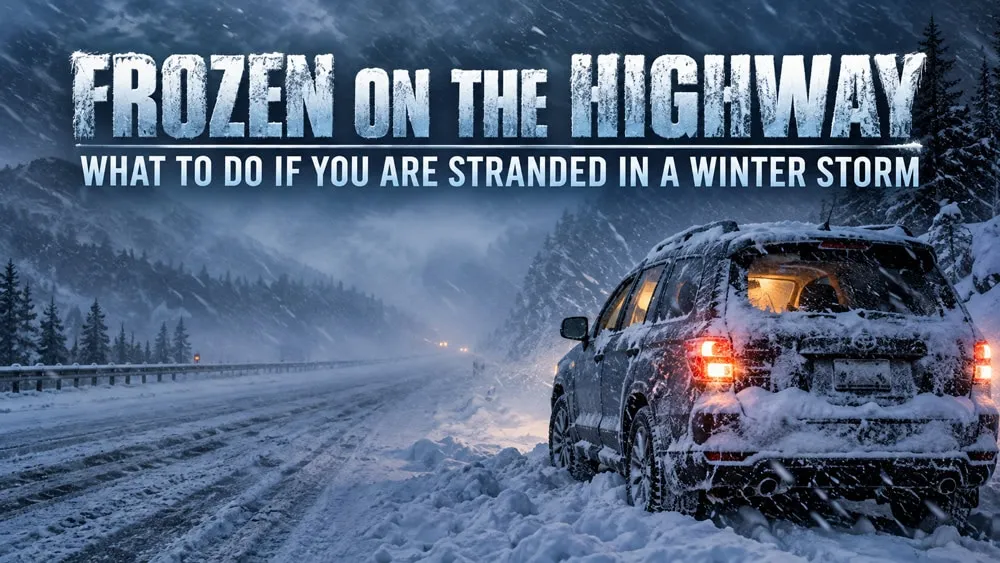
Imagine driving on a remote highway during a severe winter storm when suddenly, your engine dies. You reach for your phone to call for help, only to find zero cellular signal. Outside, blowing snow reduces visibility to near zero, and the temperature inside your vehicle begins to drop rapidly.
In an extreme winter breakdown, relying on luck is a dangerous game. Your vehicle quickly turns from a warm sanctuary into a freezing enclosure. Knowing what steps to take—and having the right gear packed before disaster strikes—can mean the difference between surviving the night and facing severe hypothermia. Here is an in-depth survival guide for handling a winter vehicle stranded scenario.
Stay with Your Vehicle
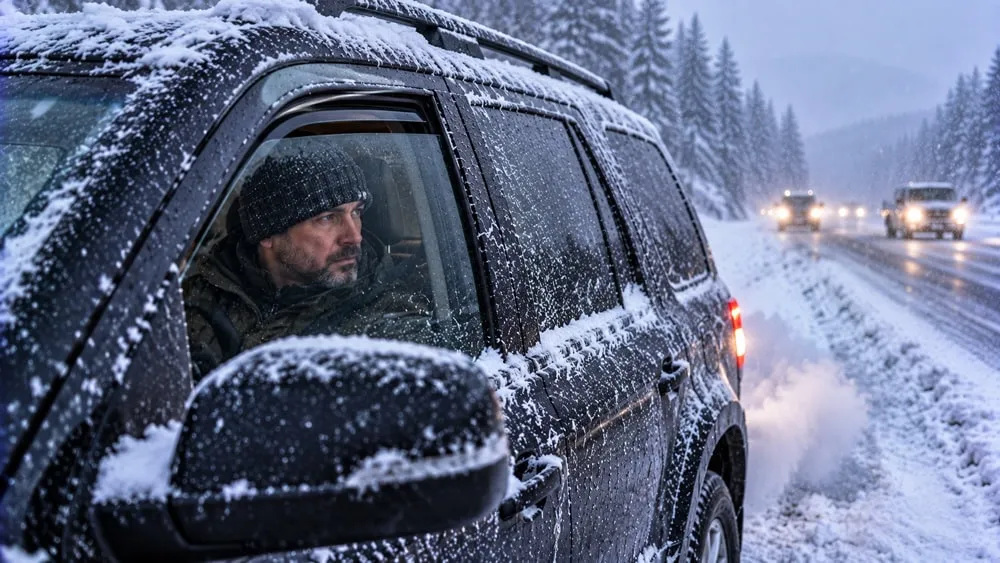
When stranded in a remote area during a snowstorm, the single most dangerous mistake you can make is leaving your car to search for help on foot.
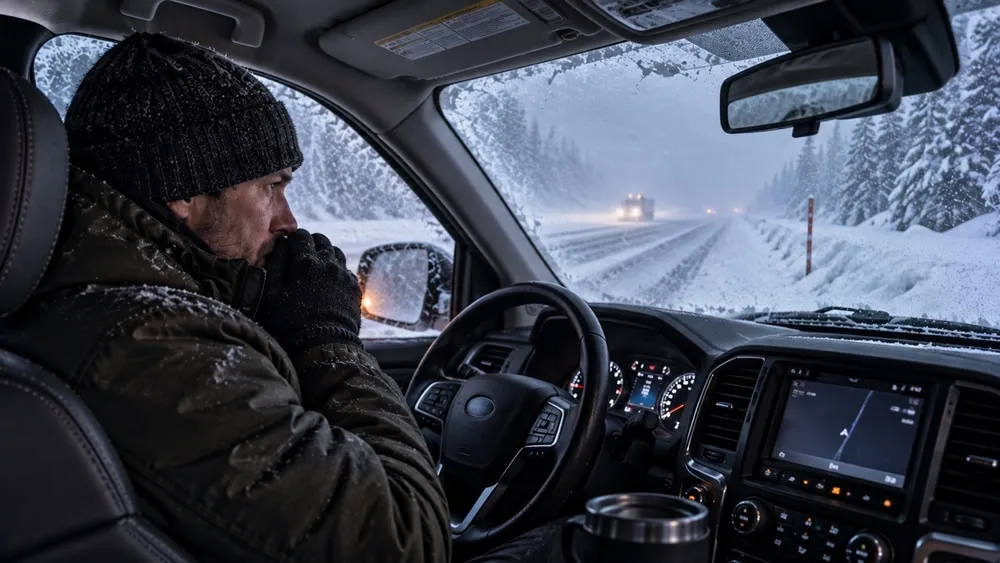
- Your Car Is Your Shelter: A vehicle provides structural protection from freezing winds and snow accumulation. It is also infinitely easier for search-and-rescue teams or snowplows to spot a vehicle on a road than a person walking through a whiteout.
- Avoid Disorientation: Severe snowstorms create disorientation within seconds. Displaced drivers often lose sight of the road, wander off course, and succumb to freezing temperatures.
The Essential Vehicle Emergency Kit Checklist
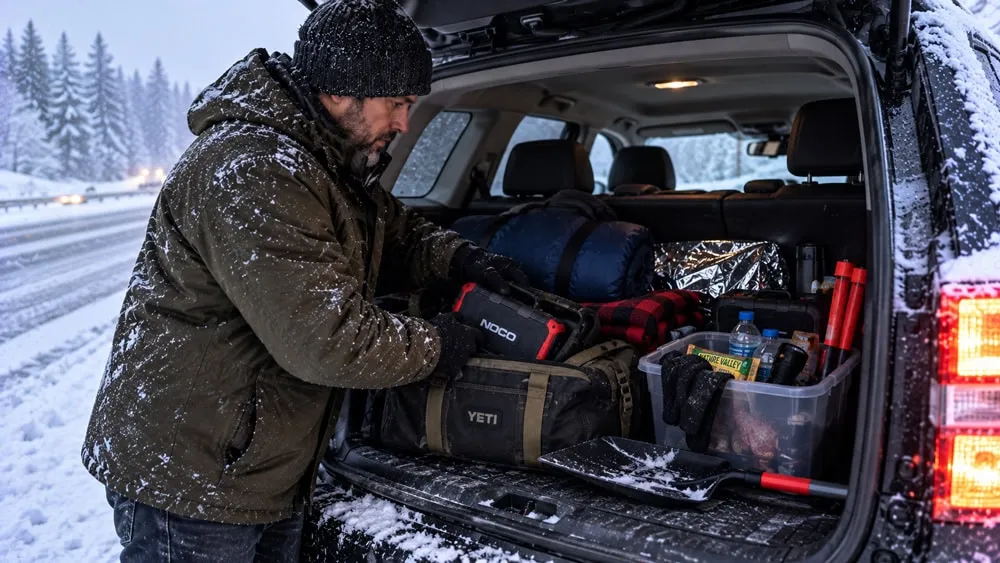
To survive extended hours stranded in sub-zero temperatures, your trunk should always carry a dedicated winter emergency kit.
| Gear Category | Key Item | Tactical Purpose |
|---|---|---|
| Warmth & Shelter | Thermal Space Blanket / Sleeping Bag | Retains up to 90% of body heat; lightweight and compact. |
| Power Supply | Portable Lithium Jump Starter & Power Bank | Jump-starts a dead battery without another vehicle; recharges phones/flashlights. |
| Sustenance | Emergency High-Calorie Rations & Water | Non-perishable food bars that won't freeze solid; provides body-warming metabolic fuel. |
| Signaling | High-Lumen Flashlight / Road Flares | Signals passing emergency responders or plows through heavy snow cover. |
Managing Heat and Preventing Carbon Monoxide Poisoning
If your vehicle's engine still turns on intermittently, you must manage fuel and heating cycles with extreme caution.
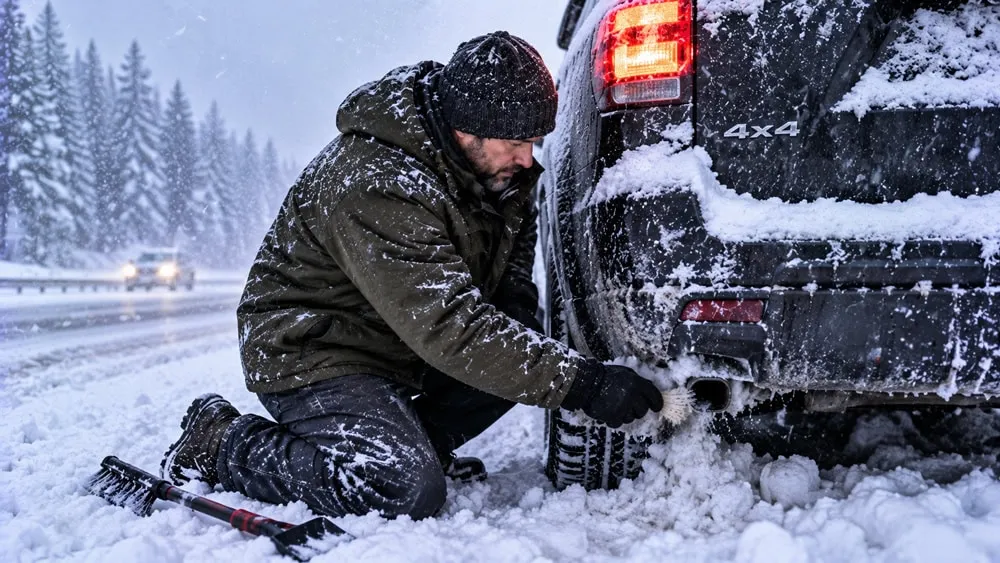
- Check the Exhaust Pipe: Before running the engine for heat, step outside briefly to clear away any snow accumulation around the tailpipe. A blocked exhaust will force toxic carbon monoxide back into the cabin.
- Ration Your Fuel: Run the engine and heater for only 10 to 15 minutes every hour. This conserves your fuel supply while keeping the cabin temperature above freezing.
- Ventilate Slightly: Crack a window on the side of the car facing away from the wind by half an inch while the engine is running to ensure fresh air circulation.
Conserving Body Heat in a Freezing Cabin
When the engine is off, your primary goal is insulating yourself within the cabin's interior space.
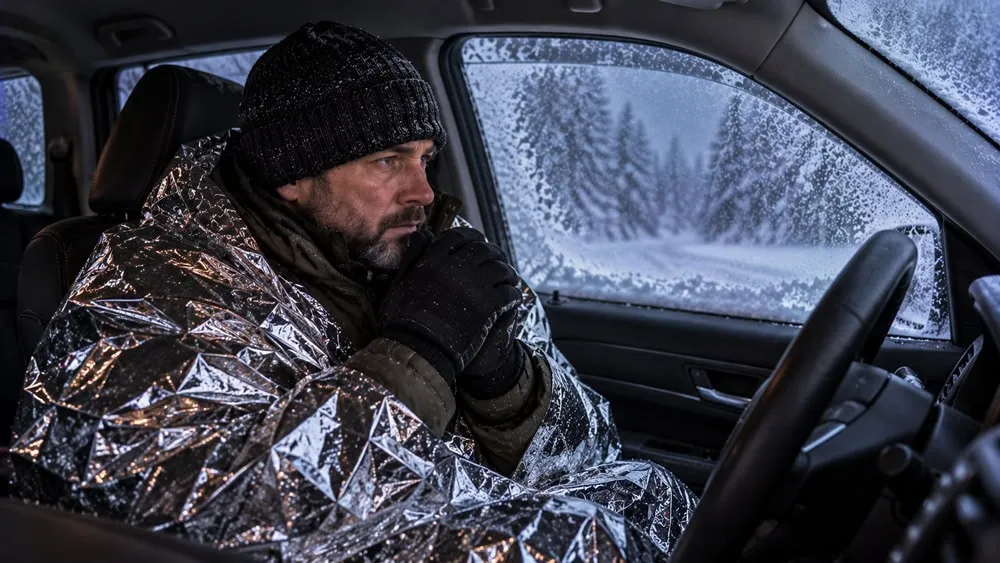
- Layer Up Early: Put on extra clothing, hats, and gloves before you start shivering uncontrollably.
- Use Thermal Space Blankets: Wrap a reflective Mylar space blanket over your body clothing or under a heavy blanket to trap your radiant body heat.
- Huddle Together: If traveling with passengers, huddle close together in the center of the vehicle to share warmth.
- Keep Moving: Perform light physical isometric exercises (flexing arms, moving toes, tapping feet) to maintain blood circulation without breaking a sweat.
Before the Next Storm
Winter Survival Checklist
If you remember nothing else, remember these five actions. Staying with the vehicle, managing heat safely, and having basic emergency supplies ready can make a dangerous winter breakdown far more manageable.
- Stay inside your car—never walk into a whiteout unless shelter is explicitly visible nearby.
- Pack an emergency kit with a thermal blanket, portable jump starter, flashlights, and food.
- Clear snow away from your tailpipe to prevent carbon monoxide poisoning inside the cabin.
- Run the engine for heat only 10 minutes per hour to conserve your gas tank.
- Crack a downwind window slightly while the engine runs to preserve air quality.
