


It is 3:00 AM. The house is completely dark, and you are jolted awake by a distinct, unfamiliar noise from downstairs. In that sudden rush of adrenaline, your heart races, and your mind struggles to catch up.
When a potential home intrusion occurs, many people rely on instincts that could actually put them in greater danger—like immediately heading downstairs to "check it out." If you are writing a safety plan for your household, here is a comprehensive, strategic guide on exactly what to do if you suspect someone is in your home.
Step 1: Freeze, Listen, and Assess
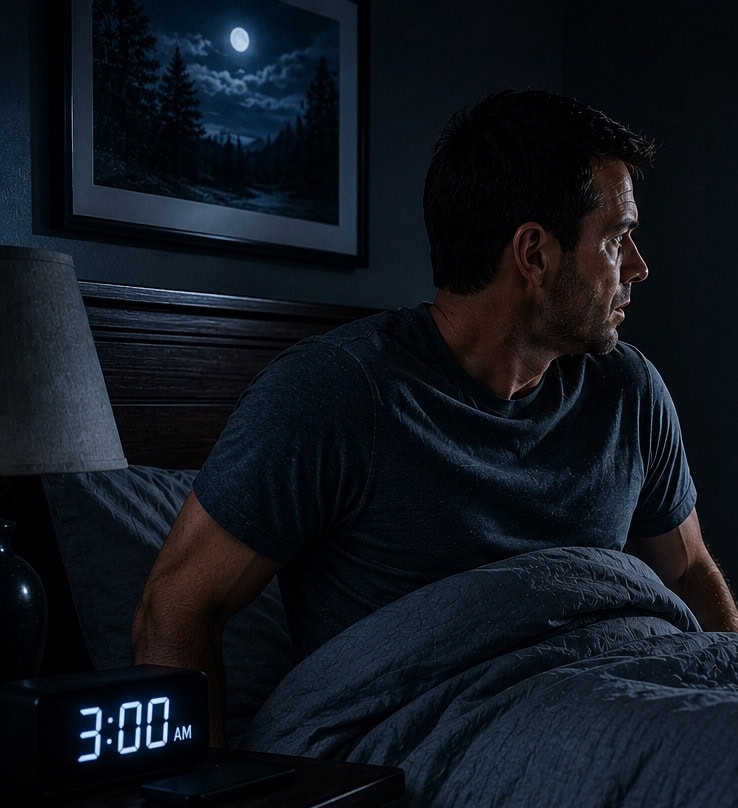
Your immediate reaction should be to remain completely still. Movement creates noise, and right now, information is your most valuable asset.
- Control Your Breathing: Inhale slowly through your nose and exhale through your mouth. This helps quiet your internal heart rate monitor so you can focus entirely on the sounds around you.
- Identify the Sound Profile: Is it a rhythmic, heavy sound (footsteps)? Is it a metallic sound (a window or door forcing open)? Or is it a sharp, sudden crash (shattering glass)?
- Establish a Baseline: Try to determine if the noise is static or moving. If you hear floorboards creaking sequentially, someone is actively navigating your home.
Step 2: Clear the Room vs. "Fortress" Mode
The biggest mistake homeowners make is playing the hero and immediately going downstairs to investigate. Unless you are moving to secure a child or family member in another bedroom, do not leave your room to hunt an intruder.
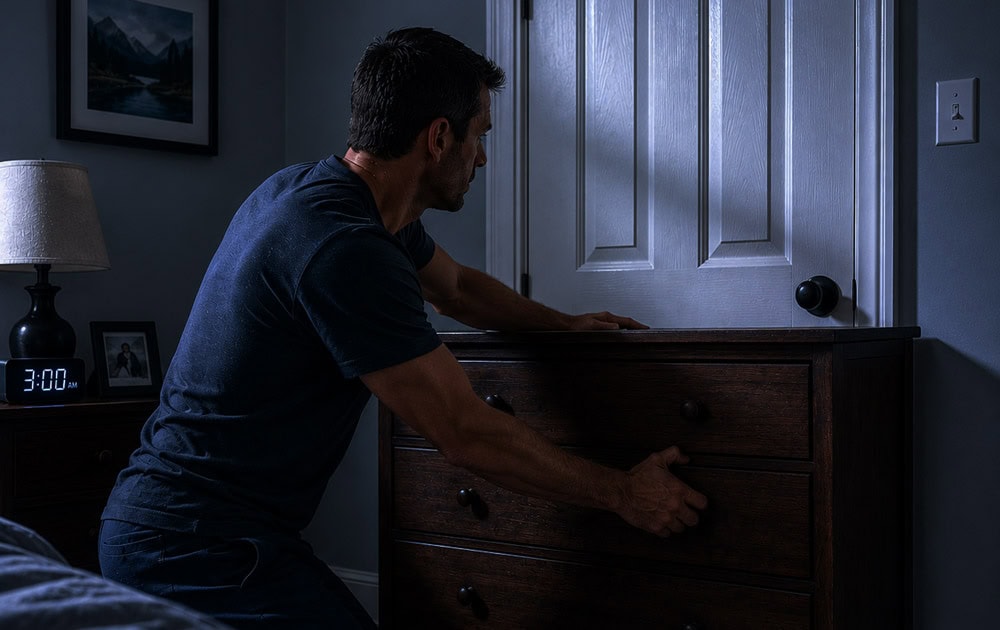
The Better Strategy: Lock and Hold
Instead of hunting, turn your bedroom into a fortress:
- Secure the door: Lock your bedroom door immediately. If you have time, quietly wedge a heavy piece of furniture (like a chair or chest) under the doorknob.
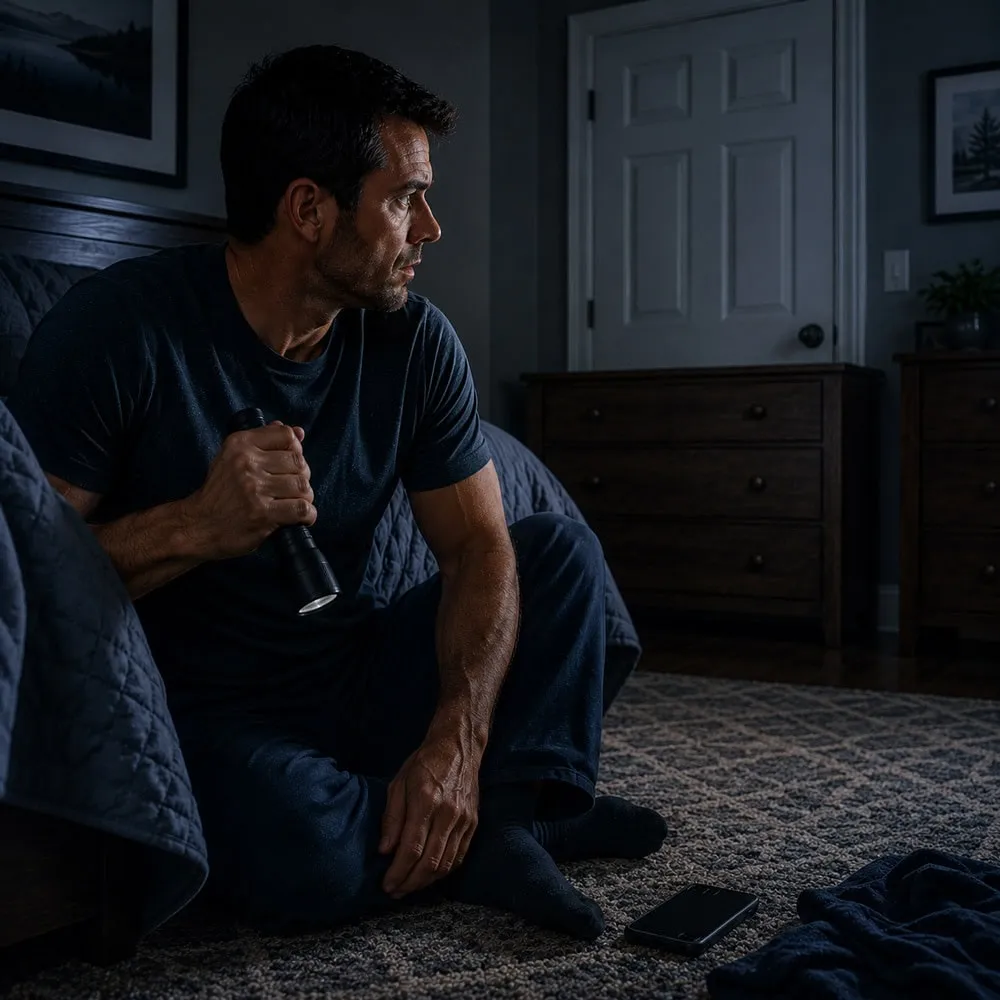
- Stay low: Move away from the door and any windows. Position yourself on the floor behind a solid object, like a bed frame or heavy dresser, which can provide cover.
Step 3: Equip Your Defensive Tools (Without Blinding Yourself)
If you have home defense tools near your bed, secure them quietly. Fumbling with equipment or turning on overhead lights can give away your exact location.
| Tool | The Common Mistake | The Tactical Approach |
|---|---|---|
| Flashlight | Turning it on instantly and keeping it illuminated, which gives away your position. | Use the "flash and move" technique. Only turn the light on in short bursts to identify a threat, then instantly change your position. |
| Cell Phone | Letting the bright screen illuminate your face in the dark. | Keep the screen face down. Lower your screen brightness ahead of time so it doesn’t act as a beacon if you need to use it. |
| Defensive Object | Swinging wildly in the dark if the door opens. | Maintain a balanced, defensive stance. Keep your weapon close to your body so it cannot be easily wrestled away from you in a confined space. |
Step 4: Initiate the Emergency Call
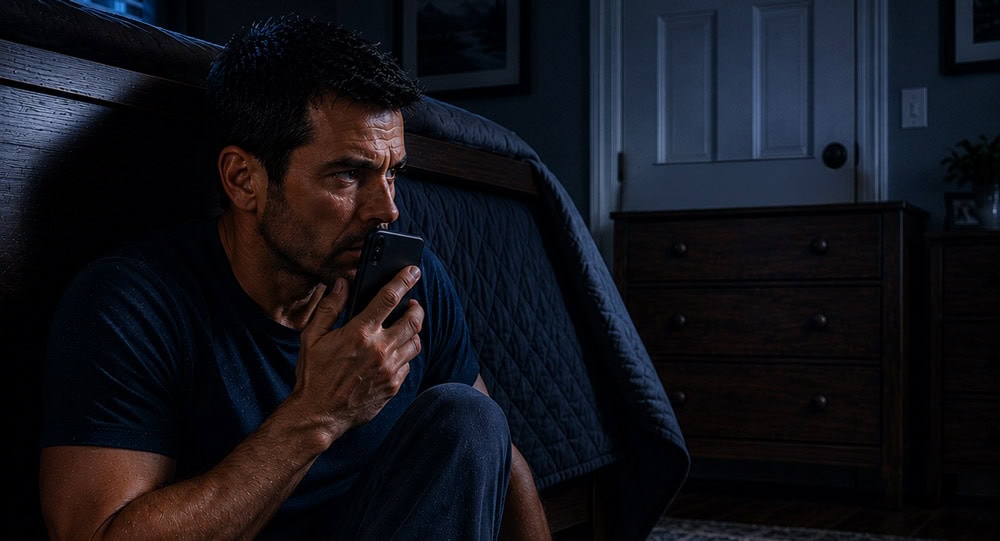
Once you are behind cover and your door is secured, call emergency services immediately.
- Whisper Your Location: Speak in a low, controlled whisper. Clearly state your name, address, and the fact that you believe someone has broken into your home.
- Keep the Line Open: Do not hang up with the dispatcher. Keep the phone active next to you so they can hear what is happening in real-time and provide updates on when officers will arrive.
- Give Key Details: Let the dispatcher know exactly where you are located inside the house (e.g., "I am locked in the master bedroom upstairs"). This ensures arriving officers know where to find you and won't mistake you for the intruder.
Summary Checklist for Home Safety
- Stay still and listen to determine the source and movement of the noise.
- Lock and barricade your bedroom door instead of going downstairs to investigate.
- Get behind solid cover on the floor, away from direct lines of sight.
- Call 911 and keep the dispatcher on the line while whispering your location.
- Do not move until law enforcement explicitly identifies themselves and secures the premises.
