

The ATM Paradox: How to Protect Yourself from a Close-Proximity Threat

Imagine this scenario: you are using a walk-up ATM late at night. You complete your transaction, pocket your card, and just as you pull out your cash, you turn around to leave. Standing right behind you is a stranger. They are well within your personal space, ignoring standard social distancing and etiquette. They haven't brandished a weapon, but they aren't moving out of your path either.
Because ATMs are highly associated with liquid cash, they are primary hunting grounds for crimes of opportunity. Facing a close-proximity threat like this can trigger a paralyzing "freeze" response. If you are preparing an essential personal security plan, here is an in-depth breakdown of how to tactically navigate an ATM confrontation.
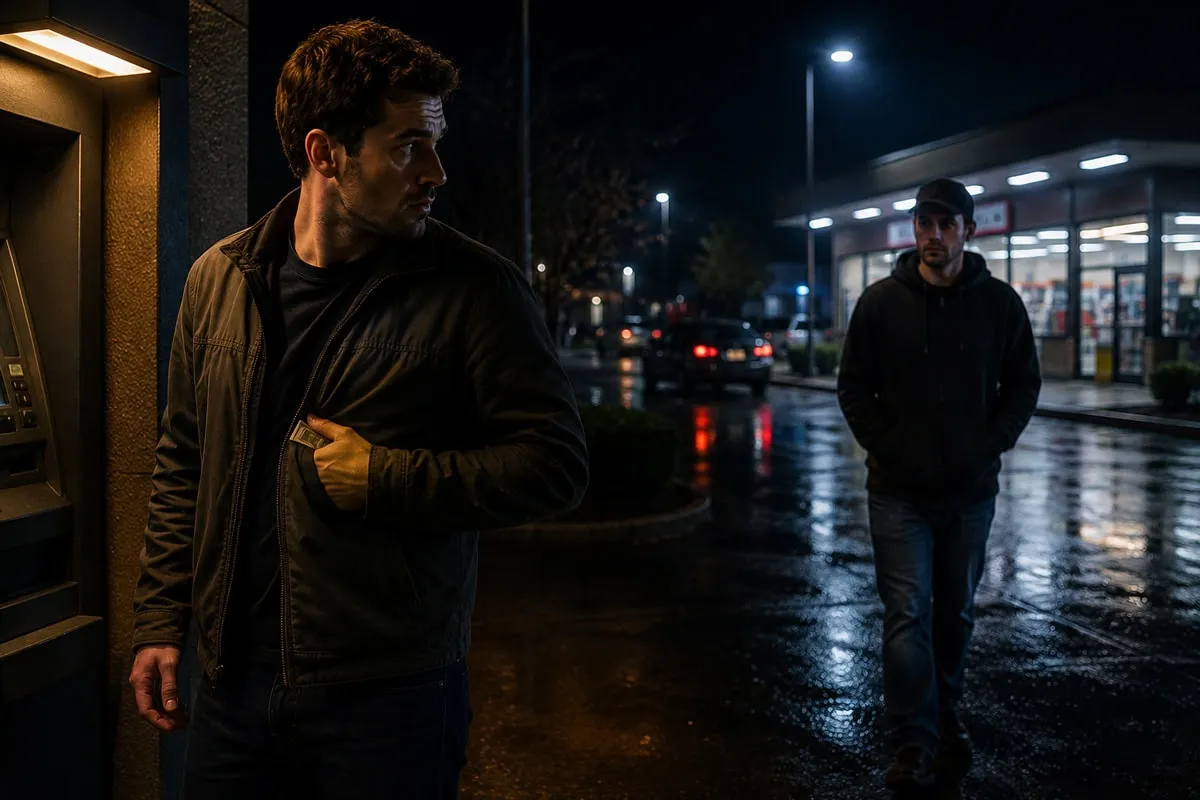
Step 1: Secure Your Assets (Without Fumbling)
When someone enters your personal space unexpectedly while you hold cash, your primary goal is to shift your focus from the money back to the human threat.
- Do Not Count Your Money: Never linger at the machine to count bills. Shove the money into a front pocket or jacket quickly, prioritizing speed over neatness.
- The Vulnerability of a Purse or Wallet: Avoid opening a deep purse or exposing a full wallet. If you are forced to stash cash, keep your hands free. Having your hands occupied with personal belongings drastically compromises your ability to throw a defensive strike or create distance.
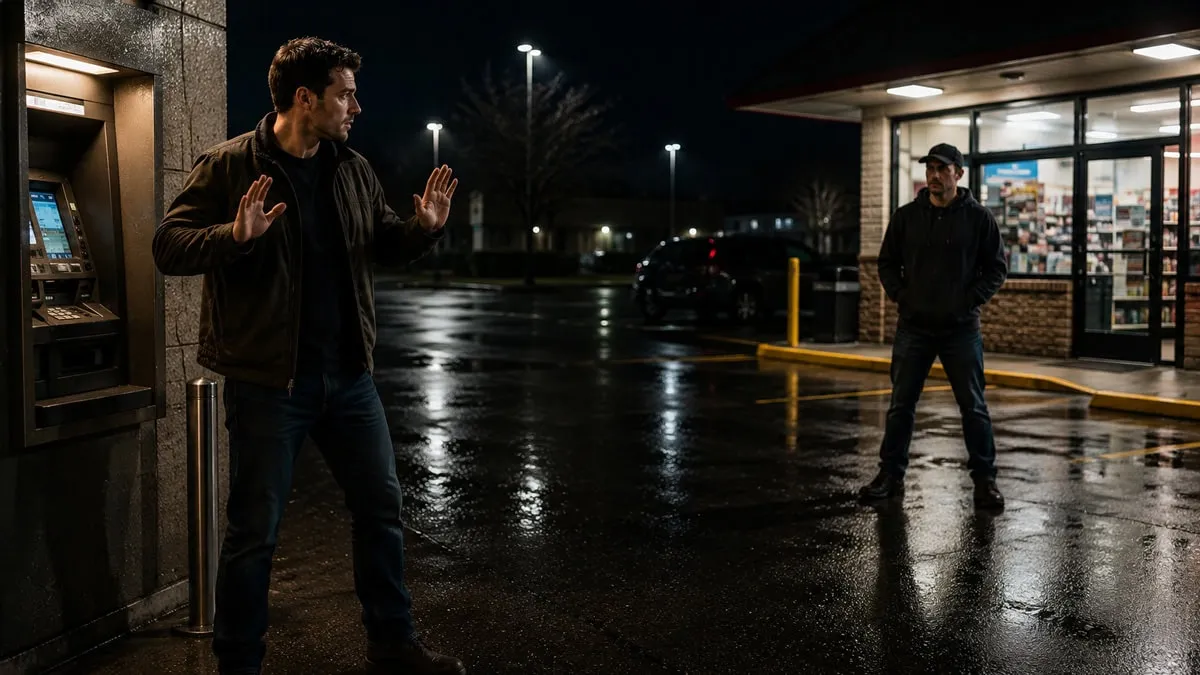
Step 2: Establish the De-escalation Stance
If the individual remains directly in front of you, you must establish an open, defensive posture immediately. This signals that you are alert without actively escalating the situation into physical violence.
- The Passive Guard: Bring your hands up to chest level with your palms facing outward. This serves a dual purpose: it builds a physical barrier to block a sudden lunge, and it signals to any nearby surveillance cameras that you are attempting to avoid a fight.
- Use Your Voice as a Weapon: Do not whisper or try to be polite. Use a booming, authoritative voice: "Step back" or "Give me space."
- The Deterrent Effect: Loud vocal commands strip a potential thief of their anonymity. They want an easy target; a target creating a scene is a major liability.
Step 3: Evading vs. Pushing Past
When a suspect stands in your direct path, you have a crucial spatial choice to make.
❌ WRONG MOVE: Pushing directly into the suspect's space.
✔️ CORRECT MOVE: Create lateral distance -> Run toward public visibility.
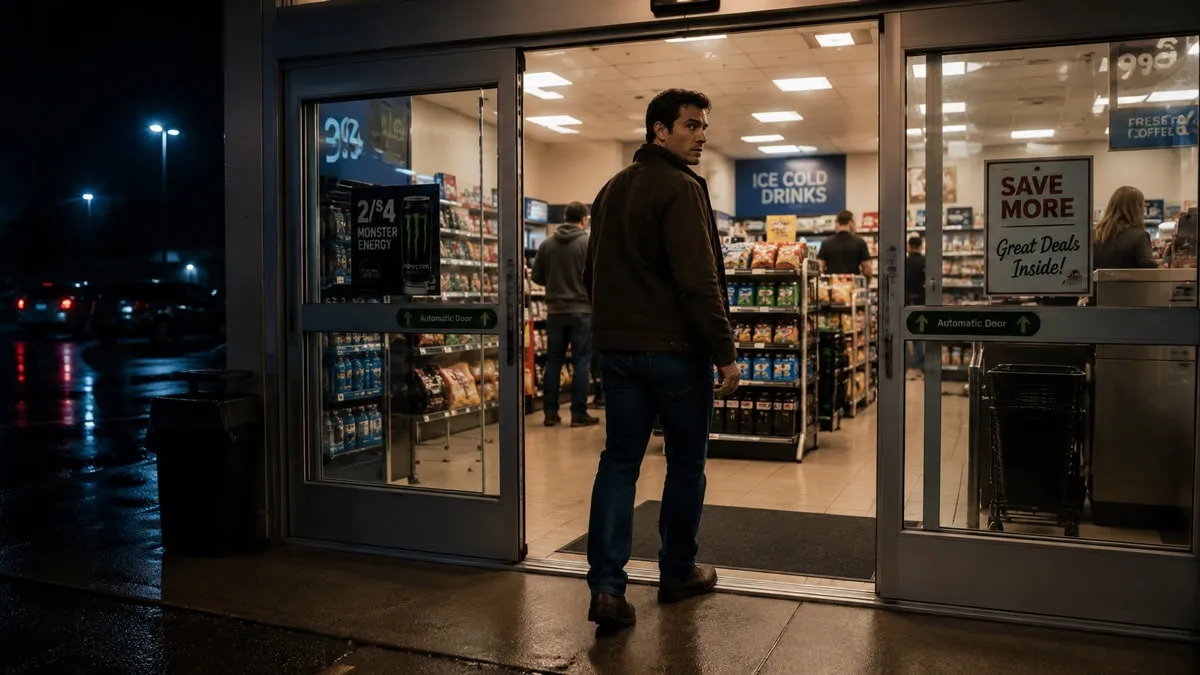
Step 4: Break the Boundary and Seek Refuge
Once you have established vocal boundaries and assessed the person's intent, don't linger to see what they do next. Move efficiently to a safe zone.
- Avoid Dark Car Paths: If your car is parked in a isolated corner of the lot, do not head directly to it if the individual begins to follow you.
- Find a Well-Lit Corridor: Head directly toward a brightly lit convenience store entrance, an open drive-thru lane, or a main thoroughfare where you can find witnesses.
- File an Immediate Report: If the encounter felt dangerous enough to cause fear, contact local law enforcement. ATMs are heavily monitored by cameras; providing the exact time of your transaction will help security and police review footage to track suspicious activity.
Summary Checklist for ATM Safety
- Always monitor your surroundings before stepping up to a public ATM.
- Stash cash immediately without counting it at the machine.
- Raise your hands to chest level in a protective stance if approached.
- Issue loud, clear commands to demand personal space.
- Evade laterally instead of physically shoving your way past a stranger.
